
Secure your child education by investing ₹500 per month*
As parents, one of the greatest responsibilities we bear is securing our child’s future—be it for education, marriage, or life’s early milestones. Traditionally, many have relied on long-term insurance plans that stretch for 10 to 20 years, often locking money into rigid, low-return instruments. But times have changed, and smarter investment options are now available.
Thank you for reading this post, don't forget to subscribe!
By investing as low as ₹500 per month in a Child Mutual Fund with a mandatory lock-in of just 5 years (or until the child attains 18 years of age, whichever is earlier), you can take a faster, more flexible, and potentially more rewarding route to build a robust financial foundation for your child.
Why Choose a Child Mutual Fund Over Insurance Plans?
Insurance plans are primarily designed to provide life cover. While they may include a savings or investment component, the returns are often low (4-6%), and the lock-in periods are long—typically 10, 15, or even 20 years. These plans also come with high charges, including mortality and administrative costs, which eat into your actual savings.
In contrast, child mutual funds focus purely on wealth creation, providing market-linked returns with much higher growth potential, typically in the range of 10-14% annually (though market-dependent). They are designed with the child’s long-term needs in mind but with far more liquidity and flexibility.
For example:
Investing ₹5,000 per month in a child mutual fund for 12 years with an expected annual return of 12% can potentially grow into a substantial corpus. Here’s a quick calculation:
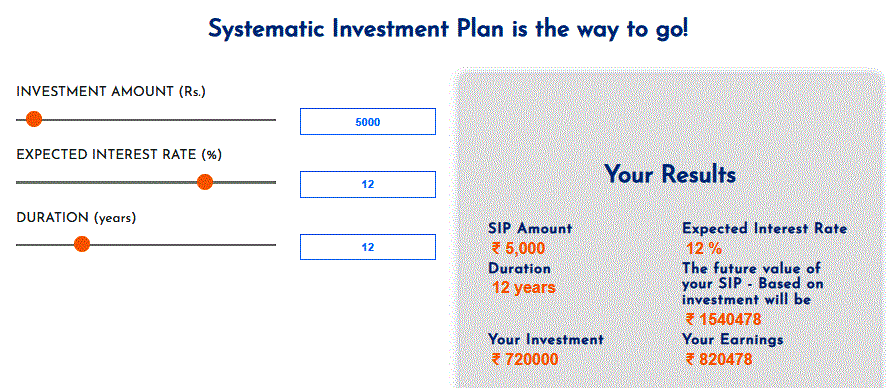
Using a mutual fund SIP calculator, the estimated value after 10 years would be approximately ₹15 lakhs, whereas a child education Insurance plan may not even become in 20 years.
This amount can be a strong foundation for your child’s higher education, especially when compared to traditional plans that offer lower returns. Mutual funds help beat inflation and offer flexibility to adjust contributions as needed.
5-Year Lock-in: Discipline with Flexibility
The 5-year lock-in (or until the child turns 18) instills discipline while allowing you more control compared to insurance products. It ensures your investment grows without impulsive withdrawals, while not tying up your funds for decades. This is ideal for parents who are starting early and want a mid-term plan that offers better returns.
Start Small, Grow Big
You don’t need a large sum to begin. With just ₹500/month, you can start your SIP (Systematic Investment Plan) in a child mutual fund. Over 10 to 15 years, even small amounts can compound significantly. For example:
-
₹1000/month for 15 years at an average return of 12% can grow to over ₹ 5 lakhs
-
Increase your monthly contribution as your income grows, and the returns multiply even faster.
This way, you don’t delay investing due to lack of funds. Starting early is more important than starting big.
Risk Is Everywhere – Invest Smartly
Some people shy away from mutual funds, fearing “market risk”. But in reality, risk exists everywhere—even in long-term insurance, where inflation erodes the real value of low returns. The key is to invest in well-managed, diversified mutual funds that are tailored for child needs.
There are several top-performing child mutual funds available that come with professional fund management, strict regulatory oversight, and strong historical performance.
Why This Matters Now
Education and marriage costs are skyrocketing. The earlier you begin investing, the lesser the financial burden when the actual need arises. Waiting 10–20 years with low returns is not a viable strategy anymore. With inflation averaging 6–7% annually, your investments need to grow faster to stay ahead.
Act Today, Don’t Delay
Child Mutual Funds offer:
-
Shorter lock-in (5 years or until child turns 18)
-
Market-linked returns (higher than traditional plans)
-
Tax benefits under 80C (in some cases)
-
Discipline and flexibility in one product
Whether you are a salaried parent, a business owner, or just starting your financial planning journey, this is one of the most cost-effective and efficient ways to secure your child’s future.
Invest wisely. Start today. Don’t wait for a crisis. ₹500/- month can go a long way in shaping a brighter tomorrow for your child.
Considering inflation and your evolving lifestyle, it’s essential to keep your investments flexible. As your income grows and expenses shift, you can adjust your investment amounts to match your changing needs and expectations. Starting small—like ₹500 per month—is a wise beginning, but reviewing your goals regularly ensures your child’s education, marriage, or future aspirations are well-funded. Unlike rigid insurance plans, mutual funds allow you to increase or pause investments as needed. This flexibility, combined with long-term compounding, helps you stay ahead of inflation and ensures your financial planning remains aligned with your family’s lifestyle and future commitments.
For more information, contact:
Shivakumar A
Mutual Fund Distributor
📞 9480240513
Insurance Advisor and Mutual Funds Distributor